Codling Moth Awareness
Codling moths are the most significant pest for apple and pear growers in eastern Washington. Here's what they are, what we're doing about them, and what you should know.
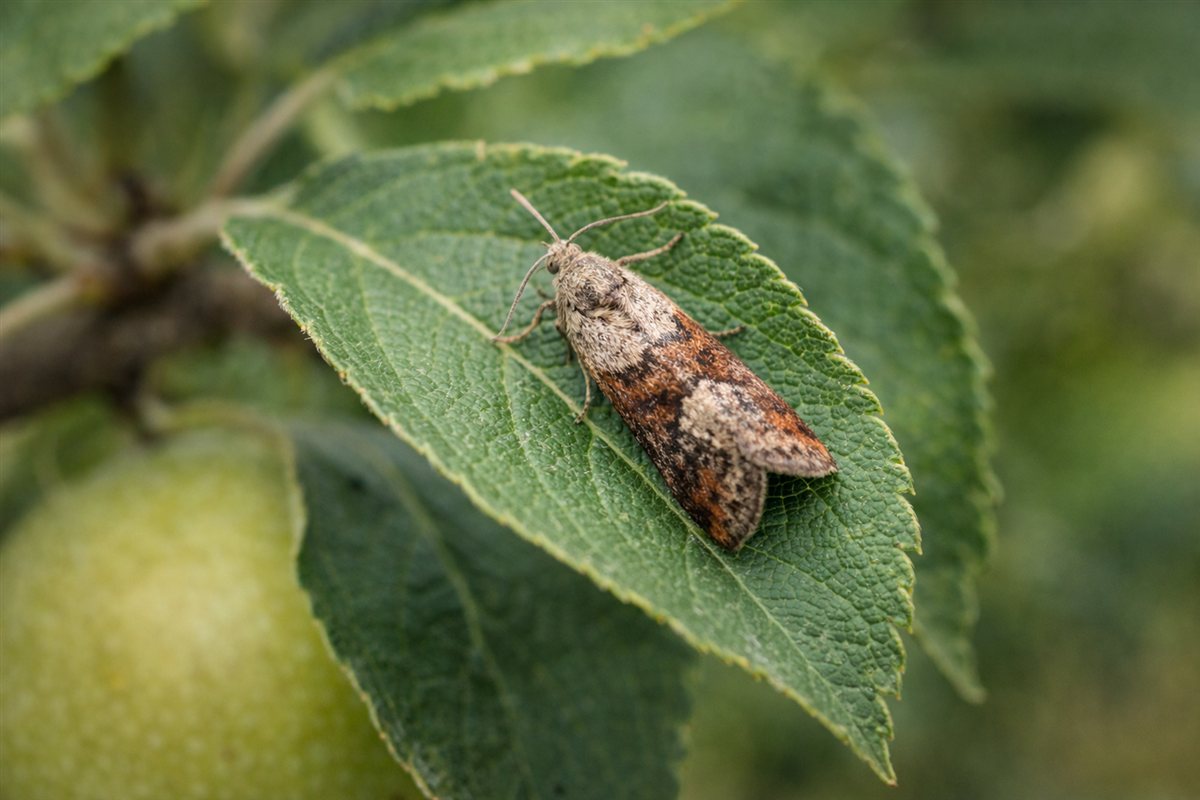
What Are Codling Moths?
Codling moths (Cydia pomonella) are small, gray-brown moths whose larvae are the classic "worm in the apple." They're native to Central Asia and have spread to every apple-growing region in the world. In Washington State, they're the number-one pest of apples and pears.
Adult moths are about ½ inch long and fly between May and September. They lay eggs on fruit or nearby leaves. The larvae hatch and tunnel into the fruit, feeding on the flesh and seeds before emerging to pupate in bark crevices or soil.
How They Affect Fruit
Codling moth damage often isn't visible from the outside. A small entry hole (sometimes sealed over) near the calyx or stem end may be the only external sign. Inside, the larva creates brown, crumbly frass tunnels leading toward the core.
Affected fruit is safe to eat — the damaged portions can be cut away, and the rest of the apple or pear is perfectly fine. However, no one wants to be surprised, which is why transparency matters.
Our Approach to Management
We plan to use an Integrated Pest Management (IPM) approach that combines multiple strategies rather than relying on any single method:
- ▸Pheromone traps. These monitor moth populations and help us time our management actions. Traps tell us when moths are active and how many are present.
- ▸Mating disruption. Pheromone dispensers saturate the orchard with synthetic moth pheromone, confusing males and preventing them from finding females. This is a widely used organic-approved technique.
- ▸Sanitation. Removing dropped fruit promptly prevents larvae from completing their life cycle in the orchard. This is simple but effective.
- ▸Biological controls. Encouraging natural predators — birds, parasitic wasps, and ground beetles — helps keep populations in check over time.
- ▸Targeted sprays (if needed). As a last resort, we may use targeted, reduced-risk insecticides timed to specific life stages. We're committed to minimizing spray use and will always be transparent about what we apply.
What This Means for You
When we're eventually open for u-pick, some fruit may have minor codling moth damage. This is a reality of fruit farming, especially for small farms that prioritize reduced-spray practices. We'd rather be upfront about this than pretend it doesn't happen.
Affected fruit is not harmful. The damaged area can be cut away and the rest enjoyed. Many people prefer fruit from farms that accept some imperfection over fruit that requires heavy chemical programs to look "perfect."
Why We're Talking About This Now
We're still years away from our first harvest, but pest management planning starts long before the first fruit appears. By being transparent about the challenges of fruit growing, we hope to set honest expectations and share what we're learning along the way.