How to Plant Fruit Trees
A practical guide to planting apple, peach, and pear trees based on what we've learned preparing the Nadeau Farms orchard.
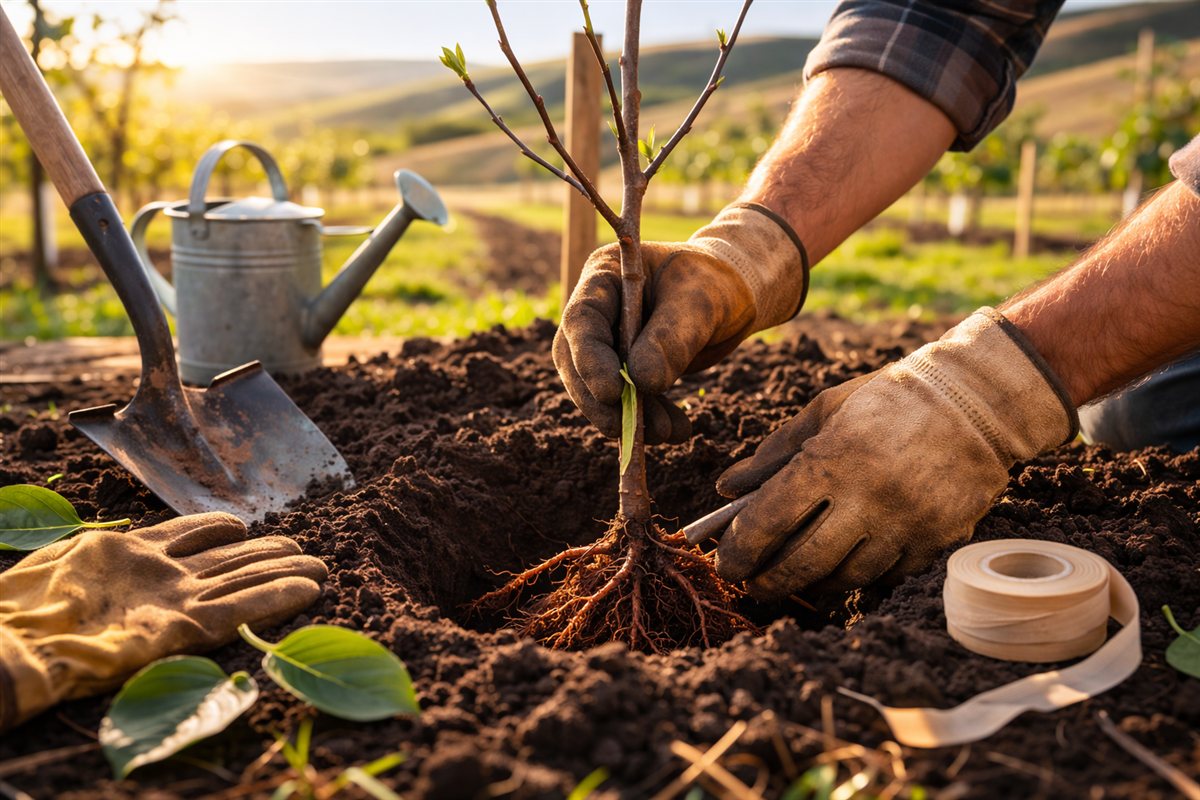
Step 1 — Choose the Right Time
In the Palouse and similar cold-winter climates, the best time to plant fruit trees is early spring — after the ground thaws but before the trees break dormancy. For bare-root trees (which are cheaper and often have better root systems), this window is typically March through early April.
Container-grown trees can be planted from spring through early fall, but spring planting gives them the longest possible first growing season to establish roots before winter.
Step 2 — Select Your Site
Fruit trees need full sun — at least 6 hours of direct sunlight per day, ideally 8 or more. Choose a spot with good air circulation, as stagnant air promotes fungal disease. Avoid planting in low spots where cold air pools on spring nights — this is where late frost damage happens.
Well-drained soil is essential. Fruit trees will not tolerate standing water around their roots. If your soil is heavy clay, consider raising the planting area or improving drainage before planting.
Step 3 — Dig the Hole
Dig a hole that's twice as wide as the root ball (or spread of bare roots) but only as deep as the roots themselves. The graft union — the swollen bump on the trunk where the fruiting variety meets the rootstock — should sit 2–3 inches above the final soil line. Burying the graft union can cause the scion to root independently, defeating the purpose of the rootstock.
Step 4 — Plant the Tree
For bare-root trees, soak the roots in water for 1–2 hours before planting. Build a small mound in the center of the hole, set the tree on top, and spread the roots evenly over the mound. Backfill with the same native soil you removed — do not add compost or fertilizer to the planting hole, as this can create a "bathtub effect" and discourage roots from growing out into the surrounding soil.
Gently firm the soil around the roots as you fill, eliminating air pockets. When done, the tree should stand straight and the graft union should be clearly visible above ground.
Step 5 — Water Thoroughly
Water deeply immediately after planting — this settles the soil around the roots and eliminates air pockets. During the first growing season, water deeply once or twice a week depending on rainfall and temperature. Deep, infrequent watering encourages roots to grow down rather than staying near the surface.
In the Palouse, our dry summers mean irrigation is essential for young trees. Established trees (3+ years) need less supplemental water, but newly planted trees will struggle without it.
Step 6 — Mulch and Protect
Apply 3–4 inches of wood chip mulch in a wide ring around the tree, extending to the drip line if possible. Keep mulch at least 6 inches away from the trunk to prevent moisture and rodent damage. Mulch conserves moisture, suppresses weeds, and builds soil health as it decomposes.
If deer are in your area (they are in Pullman), install tree guards or fencing. Young trees are very attractive to deer, and a single night of browsing can destroy years of growth.
Common Mistakes to Avoid
- Planting too deep. The graft union must stay above soil. This is the single most common mistake.
- Amending the planting hole. Rich soil in the hole creates a barrier that roots don't want to cross.
- Forgetting to water. First-year trees need consistent moisture. Don't rely on rainfall alone.
- Skipping the pruning cut. After planting, bare-root whips should be headed back to 30–36 inches to balance the top with the reduced root system.