Storing Fresh-Picked Fruit
Fresh-picked fruit lasts much longer than store-bought fruit if you store it properly. Here's how to keep your apples, peaches, and pears at their best.
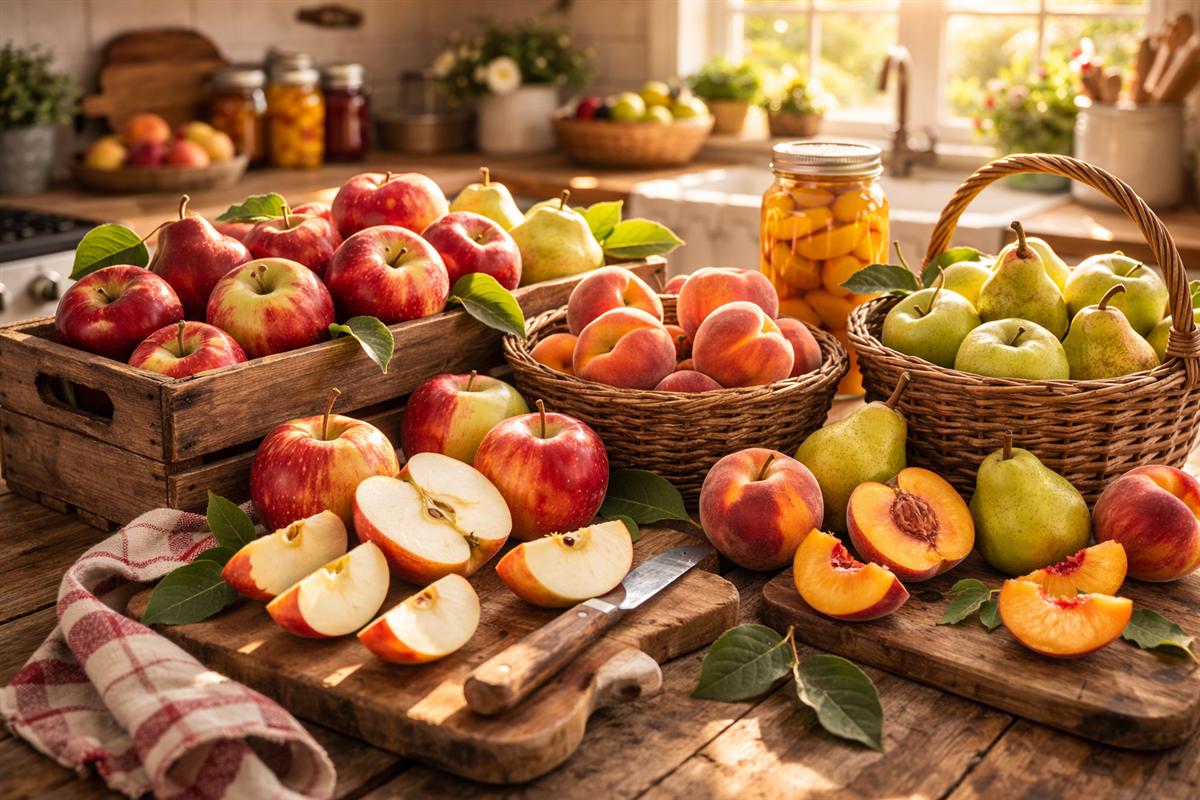
Start by Sorting
Before storing anything, sort your fruit. Set aside any that are bruised, have bird pecks, or show insect damage. These should be eaten or processed first — they'll deteriorate quickly and can accelerate spoilage of nearby fruit through ethylene gas release.
The old saying is true: one bad apple spoils the barrel. A single damaged fruit can trigger ripening and decay in everything stored with it.
Storing Apples
Apples are the easiest fruit to store long-term. They naturally produce less ethylene when kept cold, and many varieties store well for months under the right conditions.
Counter (1–2 weeks)
Fine for fruit you'll eat within a week or two. Keep out of direct sunlight. Apples ripen 6–10× faster at room temperature than in the fridge.
Refrigerator (1–2 months)
The crisper drawer is ideal. Place apples in a perforated plastic bag (poke a few holes in a regular bag) to maintain humidity without trapping too much moisture. Store away from strong-smelling foods — apples absorb odors.
Cold Storage (3–6 months)
If you have a root cellar, unheated garage, or spare refrigerator, apples can last through winter at 30–35°F with high humidity. Wrap individual apples in newspaper to prevent them from touching. Fuji, Granny Smith, and Honeycrisp store especially well. Gala and Gravenstein should be eaten sooner.
Storing Peaches
Peaches are the most fragile of our three fruits. They ripen quickly, bruise easily, and don't store well long-term. The tradeoff is that tree-ripened peaches from a local farm are incomparably better than anything shipped from 1,000 miles away.
Counter (2–4 days)
If your peaches are already ripe (soft, fragrant), eat them within a couple of days. Place stem-side down on a towel to prevent bruising. If they're still firm, leave them on the counter in a single layer — not touching each other — until they soften.
Refrigerator (5–7 days)
Refrigeration slows ripening and extends life to about a week. However, cold temperatures mute peach flavor. For best taste, take refrigerated peaches out 30–60 minutes before eating to let them warm up.
Freezing (6–12 months)
Slice peaches, toss with a little lemon juice to prevent browning, spread on a sheet pan to freeze individually, then transfer to freezer bags. Frozen peaches are excellent for smoothies, baking, and cobblers.
Storing Pears
Pears are unusual — they're one of the few fruits that ripen better off the tree. Pears left on the tree develop gritty texture and mealy flesh. For the best quality, pears should be picked firm and ripened at room temperature.
Counter Ripening (4–7 days)
Place firm pears on the counter in a single layer. They'll ripen from the inside out. Check daily by pressing gently near the stem — when there's a slight give, they're ready. Bartlett pears turn from green to yellow as they ripen; D'Anjou stay green.
Refrigerator (2–3 weeks unripe)
Firm, unripened pears can be refrigerated to delay ripening for 2–3 weeks. When you're ready to eat them, move to the counter for a few days to ripen. Asian pears can be refrigerated for up to 3 months — they're already crisp and ready to eat at harvest.
Canning and Preserving
Pears can beautifully. Let them ripen slightly (still a bit firm), peel and core, and pack in light syrup. Canned pears keep for a year or more and make an easy winter dessert.
One Rule for All Fruit
Keep ethylene-producing fruit (apples, pears, peaches) away from ethylene-sensitive produce (lettuce, broccoli, fresh herbs). The gas that ripens fruit also wilts greens. Store fruit in a separate drawer or area from your vegetables.